Tesla Lithium Refinery Groundbreaking
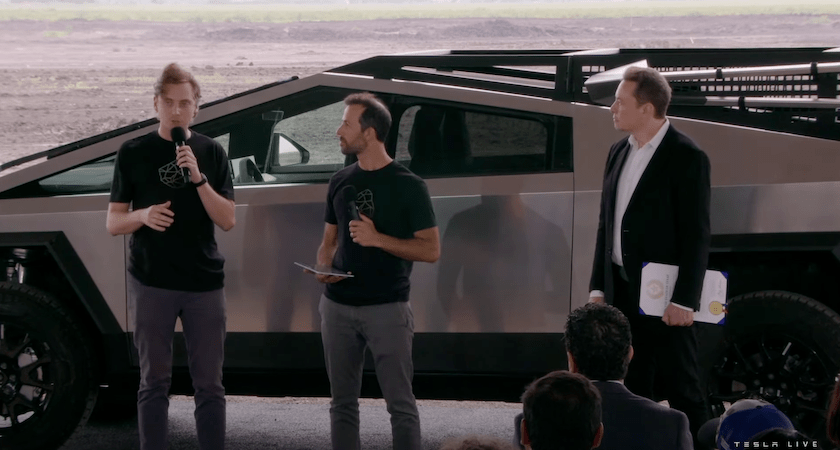
Today, we are breaking ground on Tesla’s in-house lithium refinery, located in the greater Corpus Christi area of Texas. Once complete, the facility will represent an investment of >$1B in Southwest Texas. This investment is critical to our mission to accelerate the world’s transition to sustainable energy and represents our efforts to aggressively increase the supply of battery-grade lithium hydroxide available in North America.
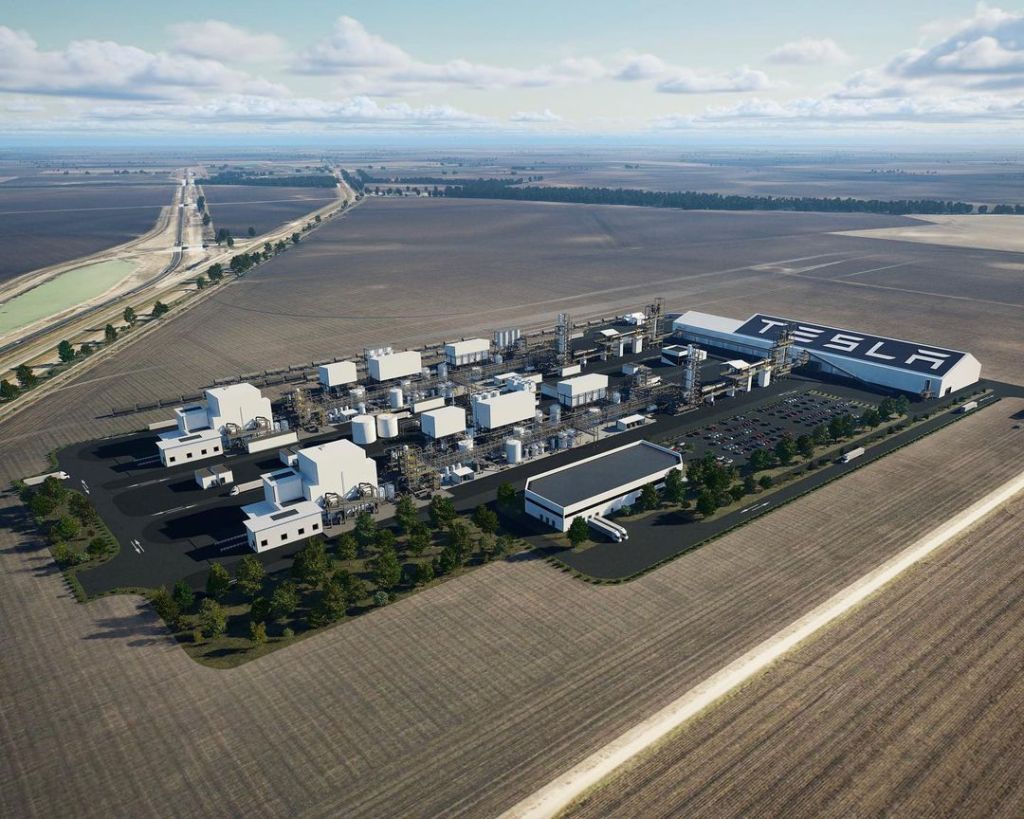
The 1,200+ acre site will be the location of the first industrial deployment of an acid-free lithium refining route. This process eliminates the use of hazardous reagents and byproducts in favor of more inert options. The byproduct from this facility, a mixture of sand and limestone, is useful in the production of construction materials, making beneficial use of traditional waste streams.
In the future, we expect this facility to also process other intermediate lithium feedstocks, including recycled batteries and manufacturing scrap.
The construction effort will create nearly 1,000 construction jobs, and the facility will employ upwards of 250 full time employees, including production technicians, operations managers and engineering roles to support ongoing plant maintenance and optimization.
We are also committed to building talent pipelines in the greater Coastal Bend area through education investments in the Robstown Independent School District, apprenticeship pathways at Del Mar Community College and internship opportunities with Texas A&M Corpus Christi.
Model 3 Scores 5-Star Green NCAP Rating
Model 3 has been awarded 5-stars with a Weighted Overall Index of 9.8/10 by Green NCAP, an independent initiative helping consumers evaluate vehicle sustainability. In its analysis, Green NCAP considers a vehicle’s energy efficiency, as well as its emission of greenhouse gasses and air pollutants.
Consuming Less to Spend Less
EVs are more efficient than equivalent ICE vehicles, enabling drivers to travel farther using the same quantity of energy.
In Green NCAP’s efficiency test, Model 3 scored a near-perfect 9.6/10, performing well in both warm and cold laboratory tests as well as highway tests. In the highway test, Model 3 received the highest score of all vehicles tested to date. By comparison, the average ICE vehicle tested in 2022 received 4.2/10, and the average hybrid vehicle scored 5.1/10.
Tesla’s process of continuous iteration introduces running changes to vehicles to improve thermal comfort, driving dynamics, efficiency, range and more. This ensures that new customers receive the latest and greatest hardware and get the most range out of every dollar (or euro) spent on energy.
In fact, 1 kWh of energy allows you to drive 7 kilometers in Model 3, compared to only 2 kilometers in an equivalent ICE vehicle¹. This efficiency leads to customer savings. Tesla’s online Calculator for European customers shows that a German Tesla owner spends as little as 0.08 € per kilometer on a Model 3 versus 0.12 € for an equivalent ICE vehicle—that’s 35% savings per kilometer².
No Air Pollutant Emissions
ICE vehicles emit a variety of polluting gases and particles in addition to carbon dioxide, causing significant harm to people and the planet. In Europe alone, almost 800,000 people die prematurely every year from preventable air pollution-related illnesses³. Model 3, and all Tesla vehicles, emits zero exhaust gas pollutants as part of Tesla’s mission to accelerate the adoption of sustainable transport and energy.
Reduced Greenhouse Gas Emissions
As an electric car, Model 3 does not directly release greenhouse gases. Thanks to its low energy consumption and relatively clean EU electricity production, Model 3 scores a near-perfect 9.8/10 in Green NCAP’s greenhouse gas evaluations.
Our 2021 Impact Report analyzes lifecycle emissions of Tesla vehicles versus equivalent ICE vehicles in the U.S., Europe and China. Its findings show that driving Model 3 produces less greenhouse gases than burning gasoline in all three regions, even with manufacturing factored in.
Tesla vehicles are designed to be more than just a great electric vehicle, but the best vehicles, period. Their efficiency are simply a positive by-product of making the absolute best and most fun products possible.
(¹) Based on WLTP consumption. Actual range may vary based on factors such as speed, weather conditions and elevation change.
(²)As of September 2022. For more information regarding these potential savings, including how this is being calculated, please visit Tesla’s Calculator. For US data, please visit this website.
(³)https://www.tesla.com/ns_videos/2021-tesla-impact-report.pdf
Opening the North American Charging Standard
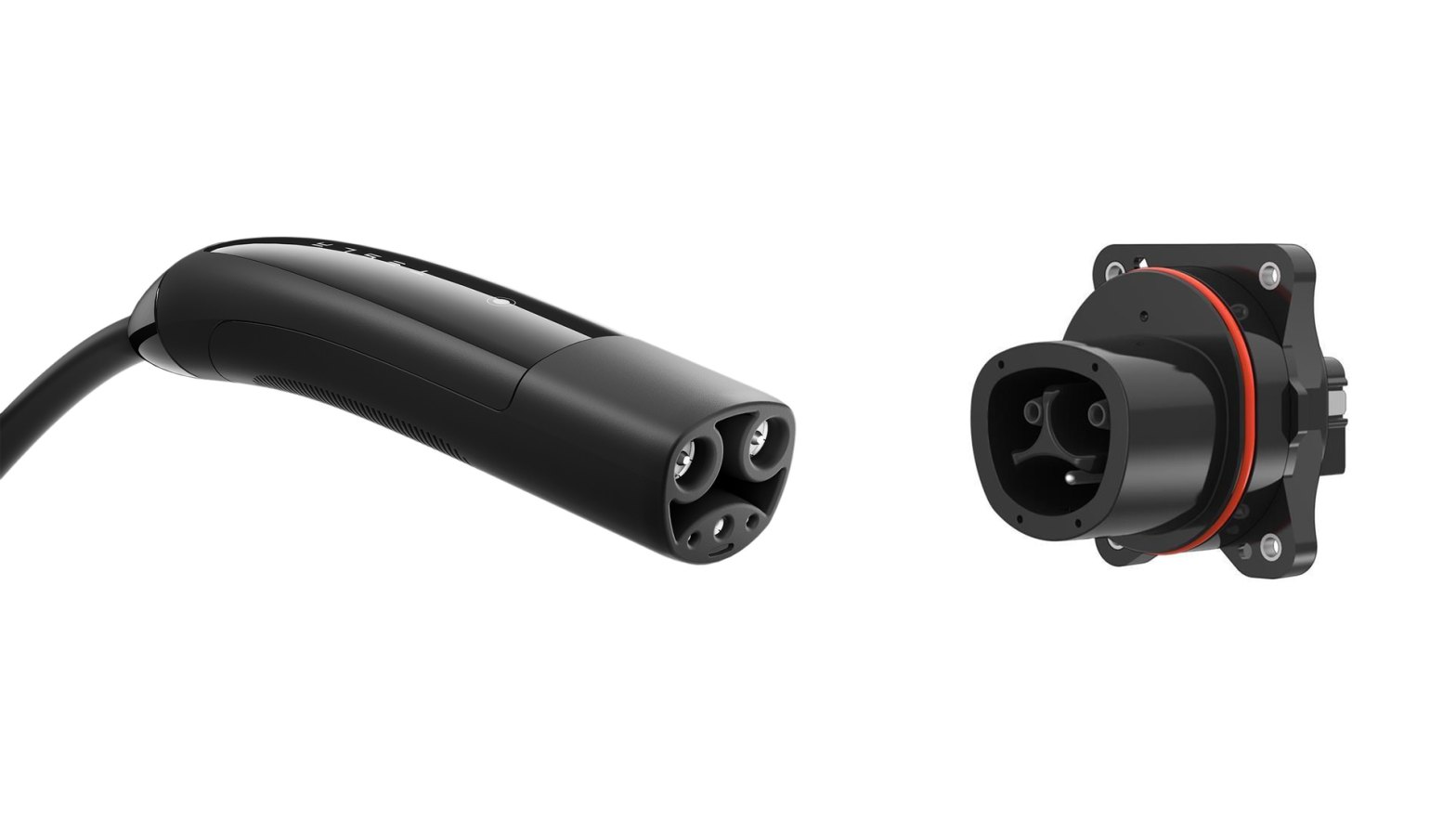
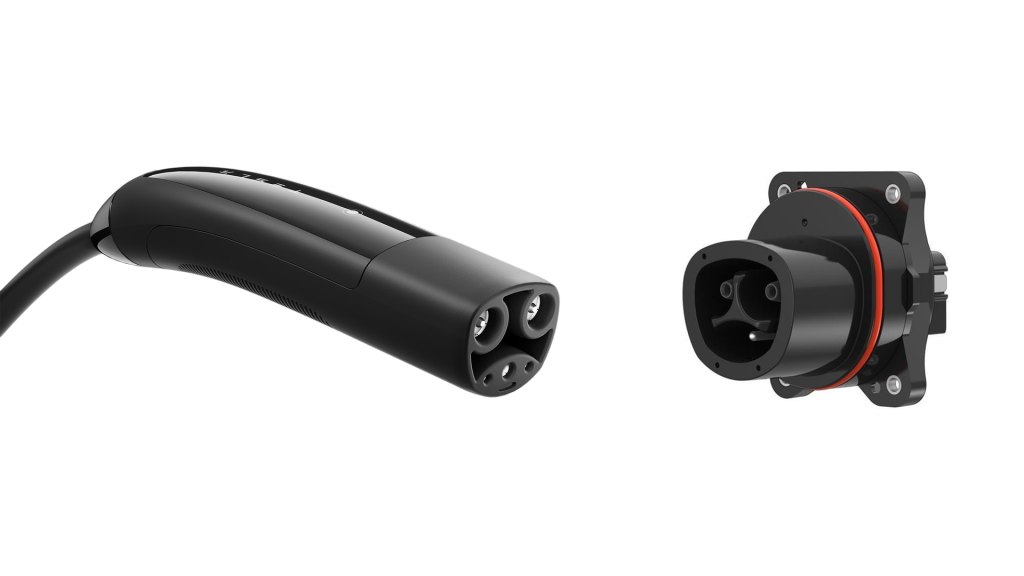
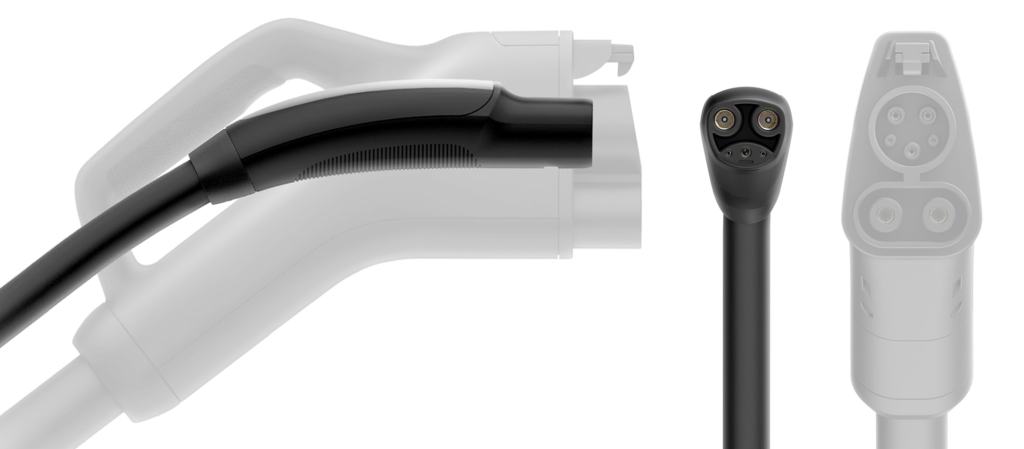
With more than a decade of use and 20 billion EV charging miles to its name, the Tesla charging connector is the most proven in North America, offering AC charging and up to 1 MW DC charging in one slim package. It has no moving parts, is half the size, and twice as powerful as Combined Charging System (CCS) connectors.
In pursuit of our mission to accelerate the world’s transition to sustainable energy, today we are opening our EV connector design to the world. We invite charging network operators and vehicle manufacturers to put the Tesla charging connector and charge port, now called the North American Charging Standard (NACS), on their equipment and vehicles. NACS is the most common charging standard in North America: NACS vehicles outnumber CCS two-to-one, and Tesla’s Supercharging network has 60% more NACS posts than all the CCS-equipped networks combined.
Network operators already have plans in motion to incorporate NACS at their chargers, so Tesla owners can look forward to charging at other networks without adapters. Similarly, we look forward to future electric vehicles incorporating the NACS design and charging at Tesla’s North American Supercharging and Destination Charging networks.
As a purely electrical and mechanical interface agnostic to use case and communication protocol, NACS is straightforward to adopt. The design and specification files are available for download, and we are actively working with relevant standards bodies to codify Tesla’s charging connector as a public standard. Enjoy.
Charging Is Our Priority
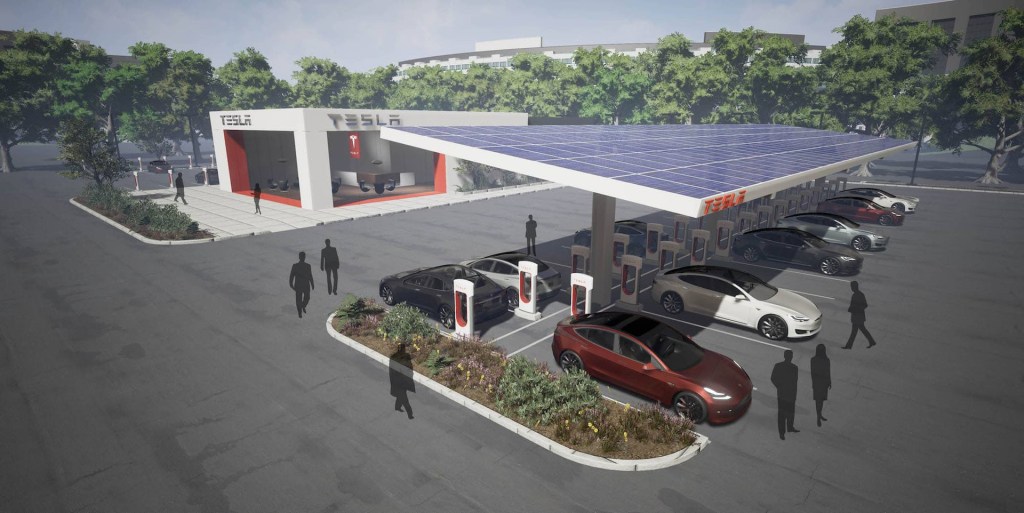
As Tesla prepares for our first mass-market vehicle and continues to increase our Model S and Model X fleet, we’re making charging an even greater priority. It is extremely important to us and our mission that charging is convenient, abundant, and reliable for all owners, current and future. In 2017, we’ll be doubling the Tesla charging network, expanding existing sites so drivers never wait to charge, and broadening our charging locations within city centers.
As always, the most convenient way to charge is to plug in overnight where you park. However, to better serve the needs of owners who are traveling or those who don’t have access to reliable home charging, we will continue to aggressively expand our public charging networks. Since we first energized the Supercharger network in 2012, Tesla has built over 5,400 Superchargers with the goal of enabling convenient long distance travel for more than 200,000 Tesla owners around the world. In parallel, we’ve built a network of more than 9,000 Destination Charging connectors that replicate the convenience of home charging by providing hotels, resorts, and restaurants with Tesla Wall Connectors. But we know that to truly advance electric vehicle adoption, we must continue investing in charging infrastructure.
We started 2017 with over 5,000 Superchargers globally and by the end of this year, Tesla will double that number to total more than 10,000 Superchargers and 15,000 Destination Charging connectors around the world. In North America, we’ll increase the number of Superchargers by 150 percent, and in California alone we’ll add more than 1,000 Superchargers. We’re moving full speed on site selection and many sites will soon enter construction to open in advance of the summer travel season.
Toward that goal, Tesla will build larger sites along our busiest travel routes that will accommodate several dozen Teslas Supercharging simultaneously. In addition, many sites will be built further off the highway to allow local Tesla drivers to charge quickly when needed, with the goal of making charging ubiquitous in urban centers.

Tesla will continue to lead the industry with the fastest, most advanced charging technology in the world and continue to build the only cars capable of leveraging that power. The ongoing expansion of the networks will ensure that Tesla drivers are able to quickly and easily charge their vehicles no matter what, and that a seamless charging experience remains our priority.
Supercharger map and network expansion plans here.
 Tesla
Tesla 